

This is Amit’s story. He was 24. He thought he found a shortcut. He didn’t.
Amit works at a BPO in Hyderabad. He earns around ₹28,000 a month. Not a lot, but he had been saving carefully for two years. By the time he was 24, he had ₹50,000 sitting in his trading account.
He wanted to grow it. He had seen people on YouTube talking about how they turned ₹10,000 into ₹1 lakh in the stock market. He thought — why not me?
Then one evening, a message came on a WhatsApp group he had joined a few months ago. The group was called something like ‘Free Stock Tips India’. About 400 people were in it.
“URGENT. Buy ABC Infratech Ltd. Price now: ₹6.20. Target: ₹25 in 3 weeks. Operator loading happening. This is your chance. Don’t miss. Buy tomorrow morning first thing.”
Amit had seen this group share tips before. Some of them had actually gone up a little. So he thought maybe this one is real too.
Next morning, he put ₹47,000 into ABC Infratech Ltd.
At first, the stock actually went up. From ₹6.20 to ₹8.50. Amit was happy. He felt smart. He thought — this is actually working.
Then one day, without any warning, the stock just started falling. ₹8.50… ₹6… ₹4… ₹2.80.
Amit checked the WhatsApp group. It was gone. The admin had left. The group was deleted.
He sold at ₹2.80. He lost ₹37,000.
Gone. Just like that.
So what actually happened?
This is called a pump and dump. It is one of the oldest tricks in the stock market. And it keeps working because people keep falling for it.
Here is how it works in simple language:
Some people — let’s call them operators — first quietly buy a lot of shares in a very small, unknown company. The stock is cheap because nobody wants it. The company is usually doing nothing real.
Then they start spreading ‘tips’ everywhere. WhatsApp groups, Telegram channels, YouTube comments, paid SMS blasts. They create hype.
Ordinary people like Amit see the tip. They buy the stock. The price goes up because of all this buying. The operator’s plan is working.
Once the price is high enough, the operators sell everything. They take their profit and disappear.
Now there are no more buyers. Only people like Amit holding shares in a company worth nothing. The stock crashes.
By the time you got that WhatsApp message, the trap was already set. You were not getting a tip. You were being used as the exit.
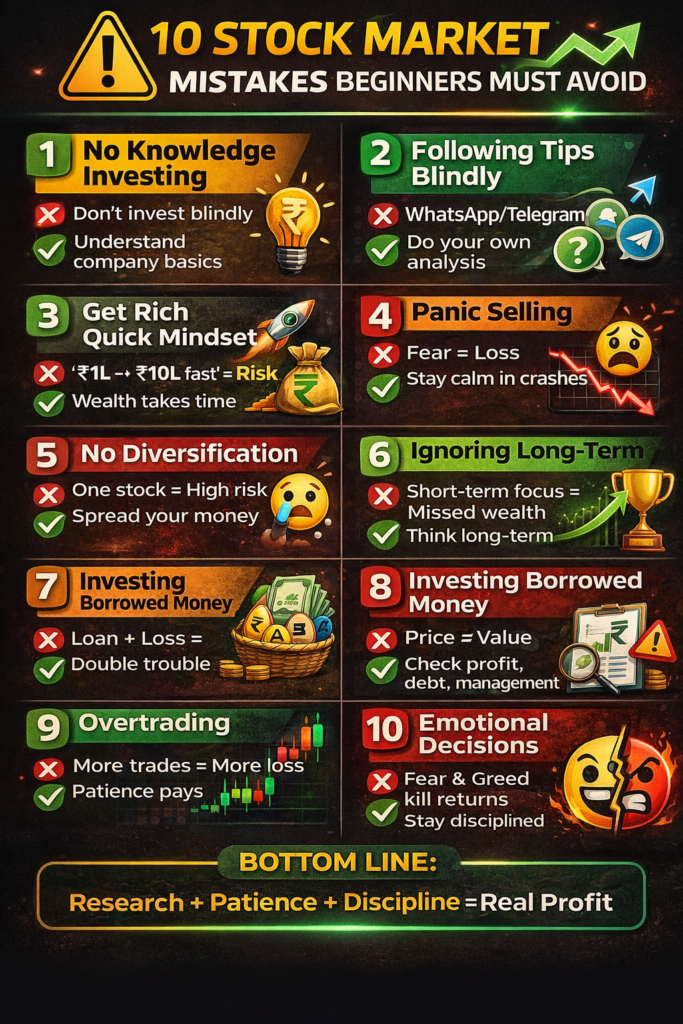
Why do people fall for it?
Honestly? Because it feels real.
The message sounds confident. The group has hundreds of members. Some previous tips actually went up a little — that was just to build trust. The price moves up at first after you buy — that is just other people also falling for the same trap.
And then there is the dream. ₹6 becoming ₹25 in 3 weeks. On a salary of ₹28,000, that kind of return feels life-changing. So you stop thinking clearly.
Amit said something very honest when he shared his story with us:
“I knew something felt off. But I wanted it to be real so badly that I ignored the feeling.”
That one line says everything.
What is a penny stock, really?
A penny stock is just a very cheap stock — usually below ₹10 or ₹20 — of a very small company. In India, most of them trade on the BSE SME platform.
They are cheap for a reason. The company has no real business. No revenue. No profits. Sometimes it is just a shell — a company that exists only on paper.
People love them because the price is low, so you can buy thousands of shares. And the idea of ‘what if this becomes the next Titan’ keeps people dreaming.
But here is something to think about. Titan was never a penny stock in the way these WhatsApp tips describe. It was a small company, yes. But it had real products, real customers, and real growth. That is very different from a company with zero revenue being pumped on Telegram.
The signs Amit missed
Looking back, the red flags were right there:
- The tip came from an anonymous WhatsApp group. No name. No SEBI registration. Nothing.
- The word ‘URGENT’ was in the message. Real investment advice is never urgent.
- 4x return in 3 weeks. No real stock does that consistently. If it sounds too good, it is too good.
- The company had no news, no products, no nothing. A 2-minute search on BSE would have shown this.
- The volume suddenly spiked before the tip. That means operators were already loading. You were buying from them.
What Amit does differently now
Amit still invests. But very differently.
He now puts ₹3,000 every month into a simple index fund SIP. He says the returns are boring. But they are real.
He also shared one rule he made for himself after losing that money:
“If a stock tip comes on WhatsApp, I don’t even open it. I just delete. That’s it.”
Simple rule. Powerful rule.
Before you invest in any stock, just do this
You don’t need to be an expert. Just spend 5 minutes and check these things:
- Go to bseindia.com or nseindia.com. Search the company name. Look at their financials — do they have real revenue?
- Check if promoters are selling their own shares. If they are running away, why are you running in?
- Google the company name + ‘fraud’ or ‘scam’. Often there is already a trail.
- Ask yourself: does this person giving me this tip have anything to lose if I lose money? If no — then why trust them?
One last thing
₹37,000 is not just money. For Amit, that was almost two years of savings. It took him a long time to rebuild it.
He is okay now. And he is glad he shared his story here because he knows someone will read it before making the same mistake.
That is exactly why MistakeIndia exists.
If someone is giving you a free stock tip on WhatsApp — ask yourself why. They are not doing it to help you. They are doing it to help themselves.